Home › Guides › Autumn Planting for Dry Summers: Drought-Tolerant Plants
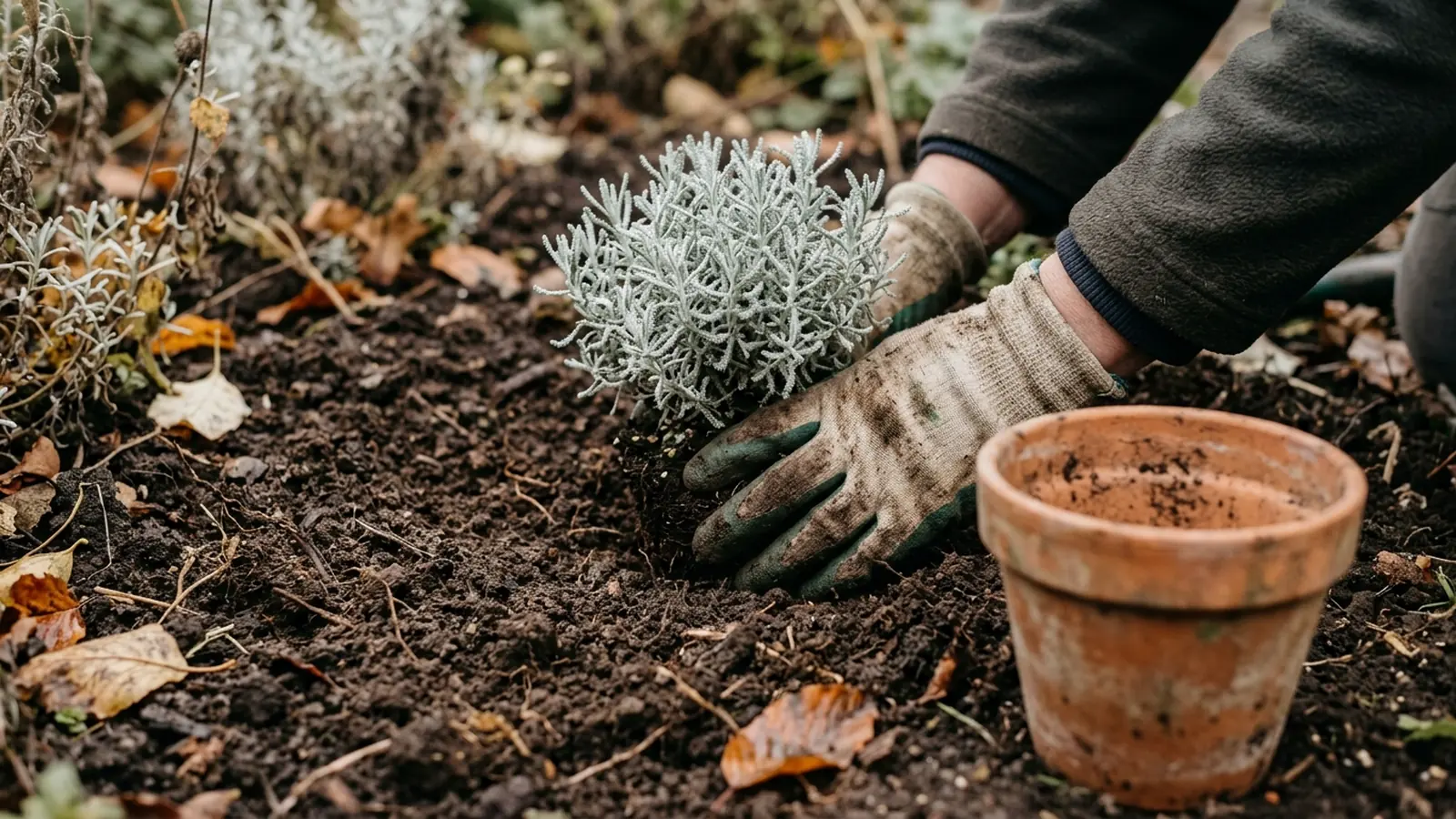
Autumn is a good time to plant many drought-tolerant plants. Plant hardy perennials and shrubs from late September to October, while the soil is still moist and not frozen or waterlogged. Roots then have the winter to settle, so the plant copes better when the next dry summer arrives. Plants that need more warmth, such as silver-leaved sun lovers that are less hardy, are usually better planted in spring.
Why autumn works better than you might think
The Royal Horticultural Society (RHS) explains that autumn planting gives trees, shrubs and non-woody perennials a head start. Roots keep growing through autumn and winter, so by summer the plant can put its energy into growth above ground rather than struggling to find water below it. Several other things help too:
- Cooler weather means less water is lost through the leaves.
- Autumn and winter rain does much of the watering for you.
- Weeds and pests are usually less of a problem than in the height of summer.
- Soil keeps its summer warmth well into autumn, which helps roots grow before the frosts.
Autumn is not a magic fix, though. New plants still need watering through their first year, as covered below.
Which plants are drought tolerant?
The RHS says that many drought-tolerant plants have silver or grey-green leaves, and that fine hairs on leaves and stems help too. These features help the plant reflect strong sun and trap moisture around its tissues.
The RHS drought-resistant plants guide lists several reliable examples:
| Plant | Size given by the RHS | Notes |
|---|---|---|
| Santolina chamaecyparissus | 50 cm x 50 cm | Compact, suits small beds |
| Artemisia ‘Powis Castle’ | 60 cm x 90 cm | Grey-leaved |
| Salvia ‘Blue Spire’ | 1.2 m x 1 m | Taller border plant |
| Abelia x grandiflora | 3 m x 4 m | Large shrub, so allow space |
| Hylotelephium spectabile (ornamental sedum) | Not stated | Listed by the RHS as drought tolerant |
Lavender and ceanothus are also on the RHS list. Yarrow (Achillea) is another reliable choice. Once established, it copes well with dry or poor soil, although it spreads readily and can be unwelcome in fine lawns or tight borders.
When to plant
Timing depends on what you are planting. These windows follow RHS planting advice for perennials .
| What you are planting | Best time | Notes |
|---|---|---|
| Perennials grown in pots | Late September to October, or March to early May | Container-grown plants can go in at any time when the ground is not frozen or waterlogged |
| Bare-root plants | Late September to October, or March to early May | These must go in during these windows |
| Less hardy, silver-leaved sun lovers | April | Gives them time to root before winter |
| Trees and shrubs | Autumn | Autumn gives roots a head start on summer heat |
If the ground is waterlogged or frozen, wait. Planting into wet, cold soil can damage roots and leave plants more exposed.
Prepare the soil
Work organic matter, such as homemade compost, into the planting area. The RHS drought-resistant gardening advice recommends this for both sandy and clay soils. This helps the soil hold water and drain properly, whether it is sandy or clay. The RHS notes that sandy and chalky soils drain quickly, while clay holds water. Improving clay takes years, so spread the work over several seasons.
Avoid fertiliser before or after planting. Feed encourages soft growth, which dries out quickly and needs extra water. Yarrow is a useful exception: the RHS says it needs free-draining soil but no soil improvement, because rich ground makes it grow floppy.
Choose a site in full sun, sheltered from strong wind, for most of these plants.
Planting and watering in the first year
- Soak the pot. Water the plant in its pot until the bubbles stop rising, before you take it out.
- Plant at the right depth and spacing. Check the label for the expected spread. The RHS suggests treating that spread as a maximum. For a plant with a 60 cm spread, planting about 50 cm apart works well.
- Water in well. Water the soil thoroughly so the moisture reaches the root zone. This encourages strong root development.
- Water regularly in year one. Even drought-tolerant plants need watering while their roots establish. Water less often but more thoroughly, and let the surface dry out between waterings.
- Mulch. Spread at least 5 cm of mulch in late autumn to late winter, roughly November to February. Well-rotted compost is a good choice. For Mediterranean-style plants, a gravel mulch of 5 to 7.5 cm works well.
- Plan for trees. Large trees may need watering for up to three years after planting.
The RHS does not give a set volume of water for each plant, so watch the plant and the soil rather than following a fixed schedule.
Watering new plants during a hosepipe ban
If your area has a hosepipe ban in force, the rules still allow you to water new plants with a watering can or a bucket. The ban covers jobs that involve a hosepipe, so you can soak the root zone by hand. The rule only applies to hosepipe use, as set out in section 76 of the Water Industry Act 1991 . Check your water company’s rules if you are unsure.
Common mistakes to avoid
- Feeding new plants. Fertiliser pushes soft growth that suffers in heat and drought.
- Planting into waterlogged or frozen ground. Roots need air and a chance to grow.
- Skipping the first-year watering. Drought tolerance comes once the plant is established, not on day one.
- Leaving bare soil. Mulch keeps moisture in and cuts down on weeds.
Checklist for autumn planting
- Pick plants with silver or grey-green leaves, or those listed as drought tolerant.
- Plant between late September and October, when the soil is moist and workable.
- Mix in organic matter, but skip the fertiliser.
- Water the root zone thoroughly and keep watering through the first year.
- Mulch with at least 5 cm once the ground is ready.
Key points
- Plant hardy perennials and shrubs from late September to October, and container-grown plants at any time the ground is not frozen or waterlogged.
- Silver or grey-green leaves and fine hairs are common features of drought-tolerant plants.
- New plants need regular watering in their first year.
- Mulch with at least 5 cm to keep moisture in the soil.
- Avoid fertiliser, which makes soft growth that struggles in drought.
Frequently asked questions
Is autumn better than spring for drought-tolerant plants? For most hardy perennials and shrubs, autumn works well. Less hardy, silver-leaved sun lovers do better in April, when they have a full season to root before winter.
Do drought-tolerant plants need watering? Yes, in their first year. Once established, they need much less. The RHS notes that trees, shrubs and perennials chosen for the conditions in your garden should not need summer watering.
How much mulch should I use? The RHS recommends at least 5 cm of organic mulch, applied in late autumn or winter. Gravel mulch for Mediterranean-style plants can be 5 to 7.5 cm.
Can I plant drought-tolerant plants in winter? Container-grown plants can go in whenever the ground is not frozen or waterlogged. Bare-root plants should go in only in the autumn or spring windows.
What is a good drought-tolerant plant for beginners? Yarrow is a reliable choice. It is drought tolerant once established and needs full sun and free-draining soil.
If you look after commercial grounds or shared spaces, the guides on Marlborough Landscapes include a piece on low-maintenance planting for those settings.