Home › Guides › Hosepipe Bans 2026: Rules and Lawn Care
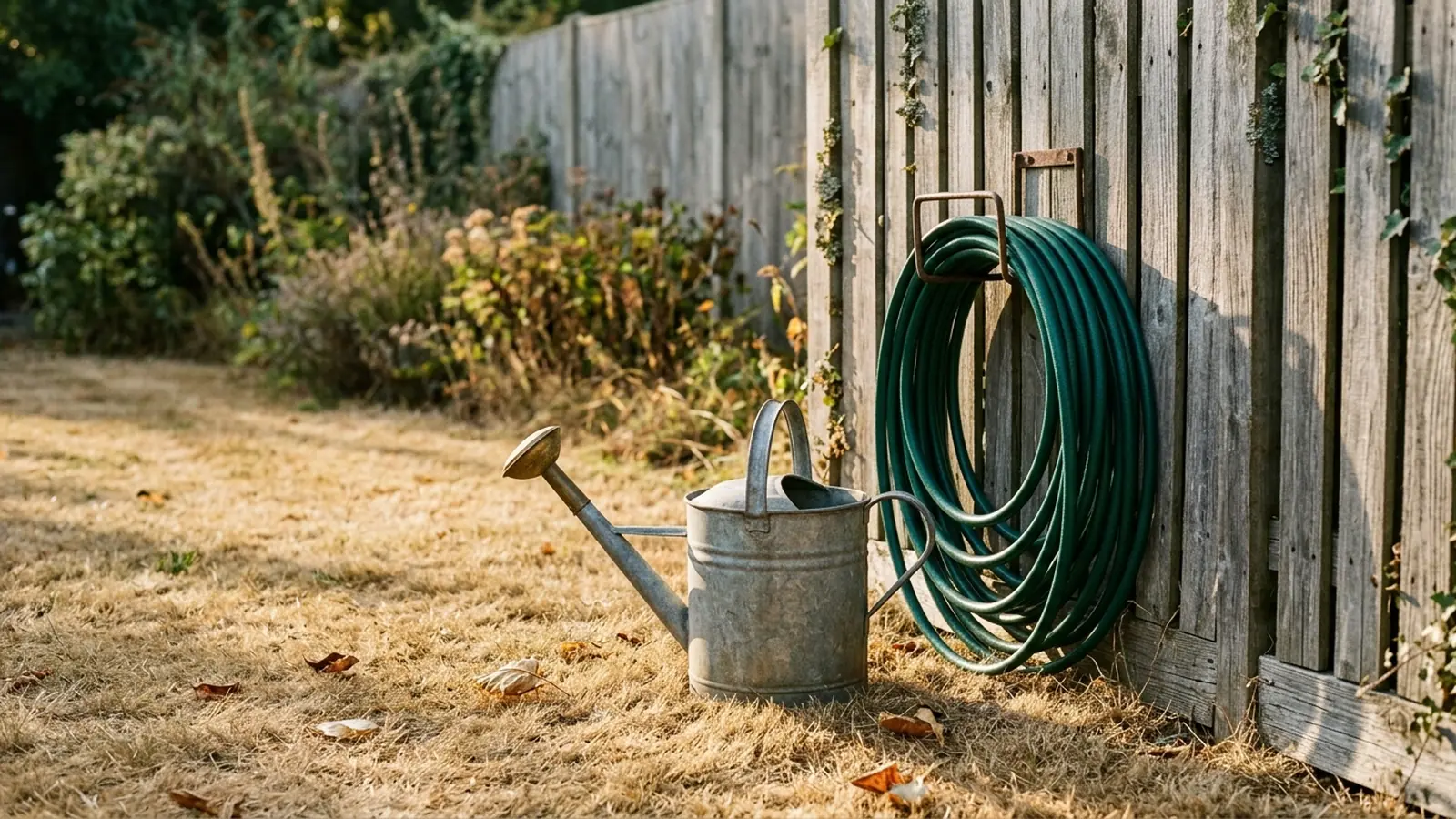
As of October 2026, ten water companies in England have temporary use bans in force, which most people call hosepipe bans. A ban stops you using a hosepipe for certain jobs, such as watering the garden or washing the car. It does not stop you watering with a can or a bucket, and dry weather does not usually kill a healthy lawn. If your grass has gone brown, its roots are usually still alive and it can green up once the rain returns.
Where things stand in October 2026
The weekly dry weather and drought report published on GOV.UK gives the latest picture. The report for 2 to 8 October 2026, published on 9 October, lists these points:
- Eleven areas of England are officially in drought, with Yorkshire added from 9 October.
- Reservoir storage across England was 54 per cent, about 21 per cent below the average for the time of year.
- Rainfall in October so far was 10 per cent of the long-term average.
- Ten water companies had temporary use bans: Affinity Water, Anglian Water, Bristol Water, Cambridge Water, Essex and Suffolk Water, Southern Water (Hampshire and the Isle of Wight only), South East Water, South West Water (excluding Bournemouth), Thames Water and Wessex Water.
In mid-August, the same series of reports put 71 per cent of England’s land in drought, so conditions have been dry for a long time. The list of companies changes quickly, so check your own water company’s website before you assume you are covered or not covered.
What a hosepipe ban actually covers
Only water companies can introduce a ban, and they do so under section 76 of the Water Industry Act 1991 . The law is narrow. A ban can only stop uses that involve a hosepipe or similar, such as watering a garden, cleaning a private motor vehicle or filling a domestic pool.
The Environment Agency explains that “garden” includes lawns, parks, grass verges and allotments used for non-commercial purposes. Land used commercially is not covered by the garden rules. Here is a simple guide:
| Activity | Covered by a hosepipe ban? |
|---|---|
| Watering a lawn or flower beds with a hosepipe | Yes |
| Washing a private car with a hosepipe | Yes |
| Filling or topping up a domestic paddling or swimming pool | Yes |
| Watering plants with a watering can or bucket | No, because it does not involve a hosepipe |
| Watering commercially used land | Generally not covered by the garden rules, but check with your water company |
Each company sets its own exemptions. ITV reported in August that exemptions include medical and religious reasons, among others, so ask your company if your situation is unusual.
What happens if you break the rules
Breaking a ban is a criminal offence. The law sets the maximum penalty at a fine of level 3 on the standard scale. Under the Sentencing Act 2020 , level 3 is £1,000 for offences committed from 1992 onwards. In practice, enforcement varies. Southern Water has said it aims to educate first and act in serious or repeated cases, and South East Water has described prosecution as a last resort. Most companies have online forms for reporting neighbours if you are concerned about someone’s use.
Looking after your lawn during a ban
The Royal Horticultural Society (RHS) gives clear advice for dry spells. These steps protect the grass and help it recover.
- Stop watering established lawns. Established grass can go brown without dying, and it will recover after rain. Only water if the lawn is new, such as turf laid or seed sown this year. Where you can, use grey water or stored rainwater rather than mains water.
- Mow less and raise the blade. Longer grass grows deeper roots. Avoid cutting close in dry weather, and take a break from mowing if the grass has stopped growing.
- Leave the clippings. Short clippings act as a mulch and slow evaporation. Remove large clumps, which can smother the grass.
- Check what grass you have. Fine-grass lawns, especially those dominated by bent, suffer most. Lawns with more fescue usually cope better. A lawn already in poor condition may struggle more.
- Hold off on feed and weedkiller. The RHS advises against using lawn weedkiller or fertiliser on drought-hit turf in autumn. If you need to treat, wait until spring.
- Repair in autumn. The RHS describes the autumn after a dry summer as the ideal time for renovation. Re-sow bare patches with a drought-tolerant mix. If the lawn was badly hit, work in plenty of organic matter before re-sowing or re-turfing.
For new lawns, the RHS suggests sowing in late September and laying turf from September to March. Those dates are useful if you are planning a repair this autumn.
Your checklist for this month
- Check your water company’s website for current bans in your area.
- Do not use a hosepipe on the lawn or borders if a ban applies to you.
- Water new plants and new turf with a can or bucket, or with stored rainwater.
- Raise the mower blade and cut less often.
- Leave weedkiller and feed until spring.
- Plan any re-seeding around the RHS timings above.
Key points
- As of 9 October 2026, ten water companies in England had temporary use bans, and eleven areas were in drought.
- A hosepipe ban covers only jobs done with a hosepipe. Watering cans and buckets are not affected.
- The maximum fine for breaking a ban is £1,000.
- Established lawns usually recover after rain, so stop watering them and mow less.
- Autumn is the time to repair bare patches and re-sow.
Frequently asked questions
Can I water my lawn with a watering can during a hosepipe ban? Yes. The ban only covers uses that involve a hosepipe. If you are unsure about a specific method, check your water company’s guidance.
Will my lawn die in a drought? Usually not. Brown grass can still have living roots that send up new growth once it rains. Fine-grass lawns and lawns already in poor condition are most at risk.
How long does a hosepipe ban last? There is no fixed length. Each water company decides whether to impose a ban, based on the weather and its own water resources. The National Drought Group, which oversees the drought response, meets regularly, and its next meetings after the latest report were set for 12 and 19 October 2026.
Do hosepipe bans apply to my business? The garden rules generally do not cover commercially used land, but the position can depend on your water company and your use. Ask your company directly if you are unsure.
What should I do if I see someone breaking the ban? Most water companies have an online reporting form. Some ask people not to call about neighbours, so check the company’s website before you report.
If you look after commercial grounds, the guides on Marlborough Landscapes cover grounds maintenance, including planting for shared and commercial spaces. The site also has a directory of local gardeners in Wiltshire, West Berkshire and north Hampshire if you need help with a lawn or hedges.